
Department of Services for Children, Youth and their Families Logo Department of Services for Children, Youth and their Families
Division of Prevention & Behavioral Health Services

Youth Suicide Prevention & Support


For Immediate Assistance

24/7 Youth Crisis Support: 1-800-969-HELP(4357)

Crisis Text and Chat Line: 988

Emergency Response: Dial 9-1-1


For information about mental health and substance use emergencies, visit Mental Health and Substance Use (SMHU) Emergency.

Note: Any police department, hospital or walk-in clinic can call a mobile crisis unit for anyone in distress.


Suicide Prevention Gun Safety Campaign

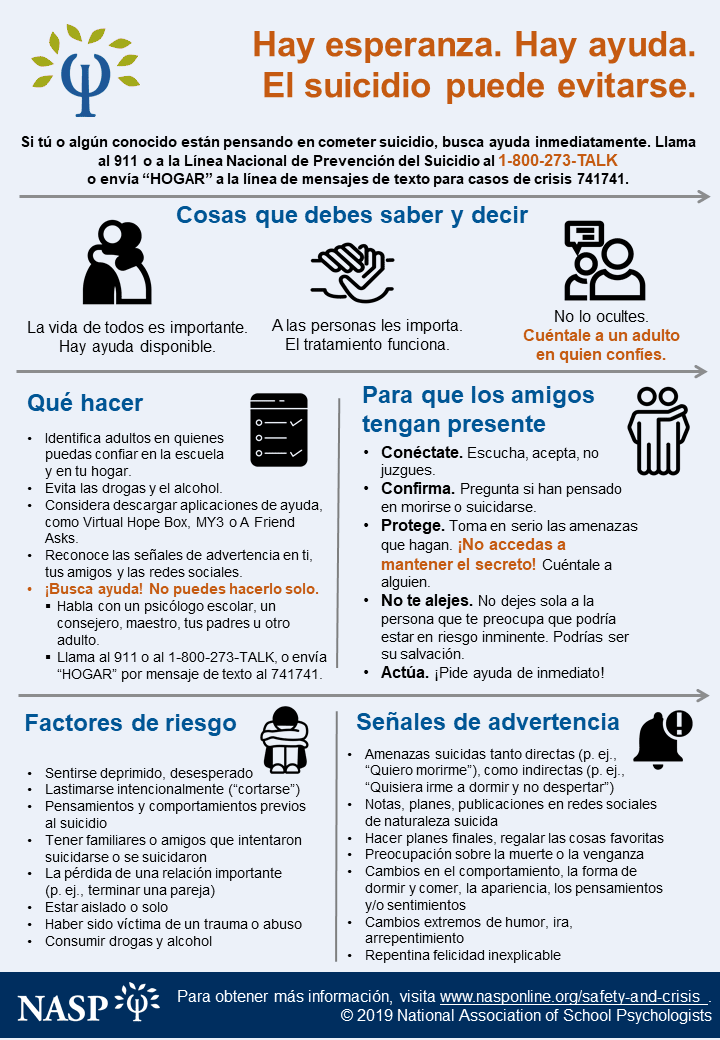
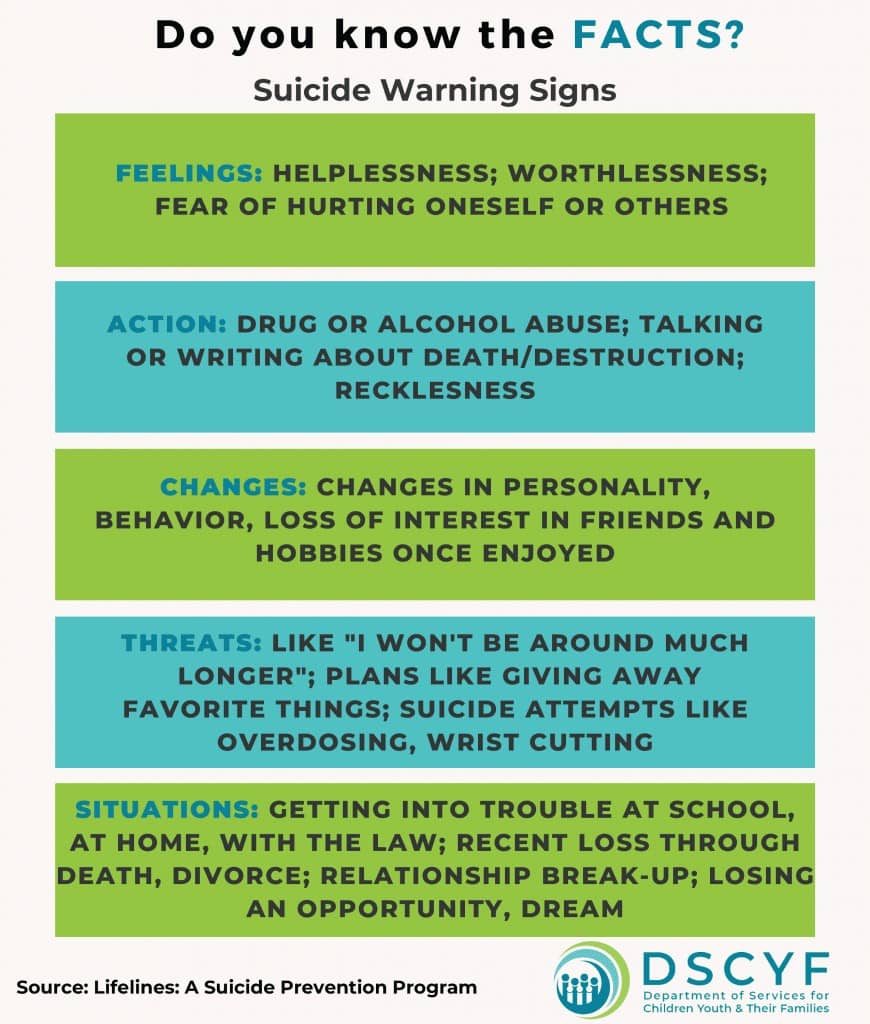
Suicide Warning Signs

changing emotions

Feelings

  • Hopelessness: feeling like things are bad and won’t get any better. Fear of losing control, going crazy, harming himself/herself or others.
  • Worthlessness: feeling like an awful person and people would be better off if he/she were dead. Hating himself/herself, feeling guilty or ashamed. Being extremely sad and lonely, feeling anxious, worried or angry all the time.

a person consoling another person

Actions

  • Drug or alcohol abuse
  • Talking or writing about death or destruction
  • Aggression: getting into fights or having arguments with people
  • Recklessness: doing risky or dangerous things

a sad person and another person there supporting them

Changes

  • Personality: behaving like a different person, becoming withdrawn, tired all the time, not caring about anything, or becoming more talkative, outgoing
  • Behavior: can’t concentrate on school or regular tasks
  • Sleeping and eating patterns: sleeping all the time or not being able to sleep at all, or waking up in the middle of the night or early in the morning and not being able to get back to sleep, losing appetite and/or overeating and gaining weight
  • Losing interest in friends, hobbies, and appearance, or in activities or sports previously enjoyed

speech bubbles

Threats

  • Statements like “How long does it take to bleed to death?”
  • Threats like “I won’t be around much longer” or “Don’t tell anyone else..you won’t be my friend if you tell!”
  • Plans like giving away favorite things, studying about ways to die, obtaining a weapon or a stash of pills: the risk is very high if a person has a plan and the way to do it


a broken heart with a bandaid

Situations

  • Getting into trouble at school, home or with the law
  • Recent loss through death, divorce, or separation; the break-up of a relationship; losing an opportunity or a dream; losing self-esteem
  • Changes in life that feel overwhelming
  • Being exposed to suicide or the death of a peer under any circumstances

Source: Lifelines: A Suicide Prevention Program

Suicide Prevention Resources

Free Social Media Graphics & Materials

Click. Save. Share.

You Are Not Alone Campaign Materials Social Media Graphics

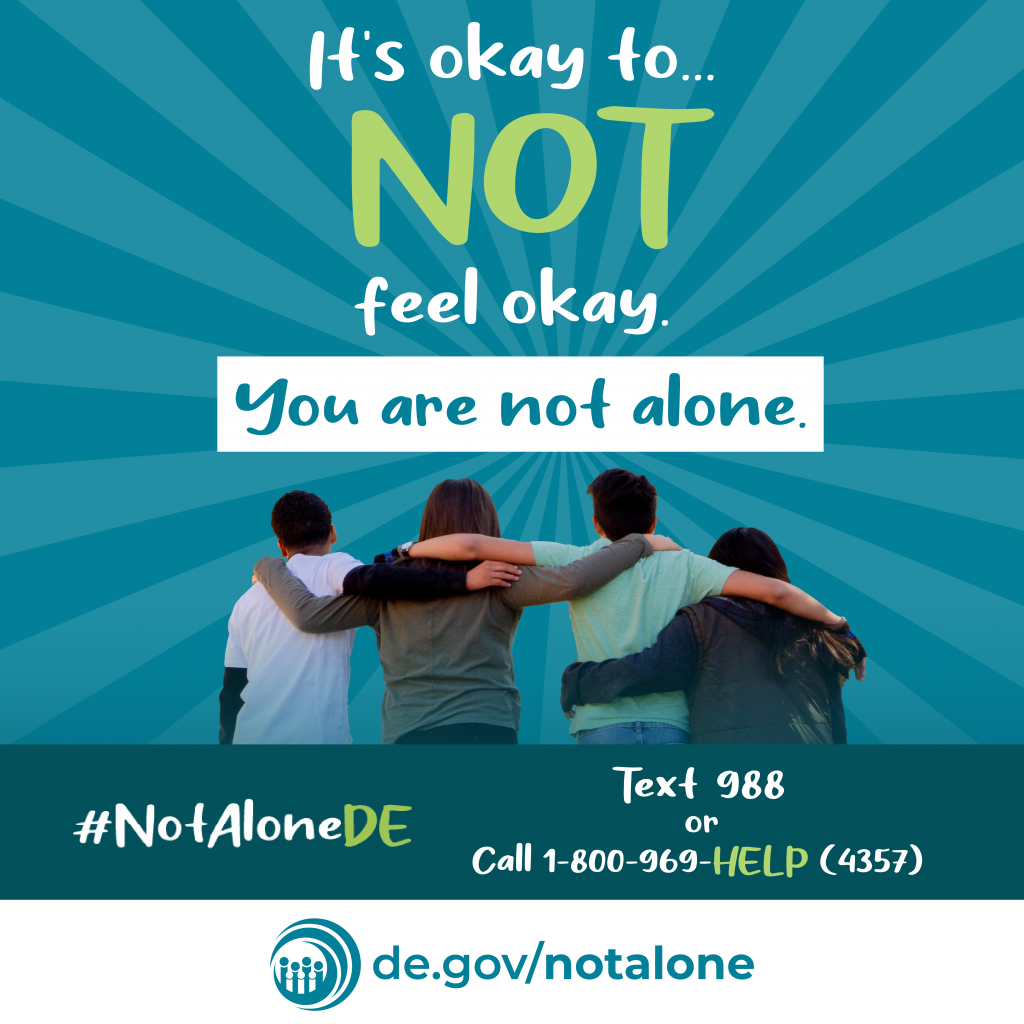
Social media graphic. It's okay to...not feel okay. You are not alone. #NotAloneDE
Social media graphic. "It's okay to ... not feel okay. You are not alone." #NotaloneDE Text 988 or call 1-800-969-HELP
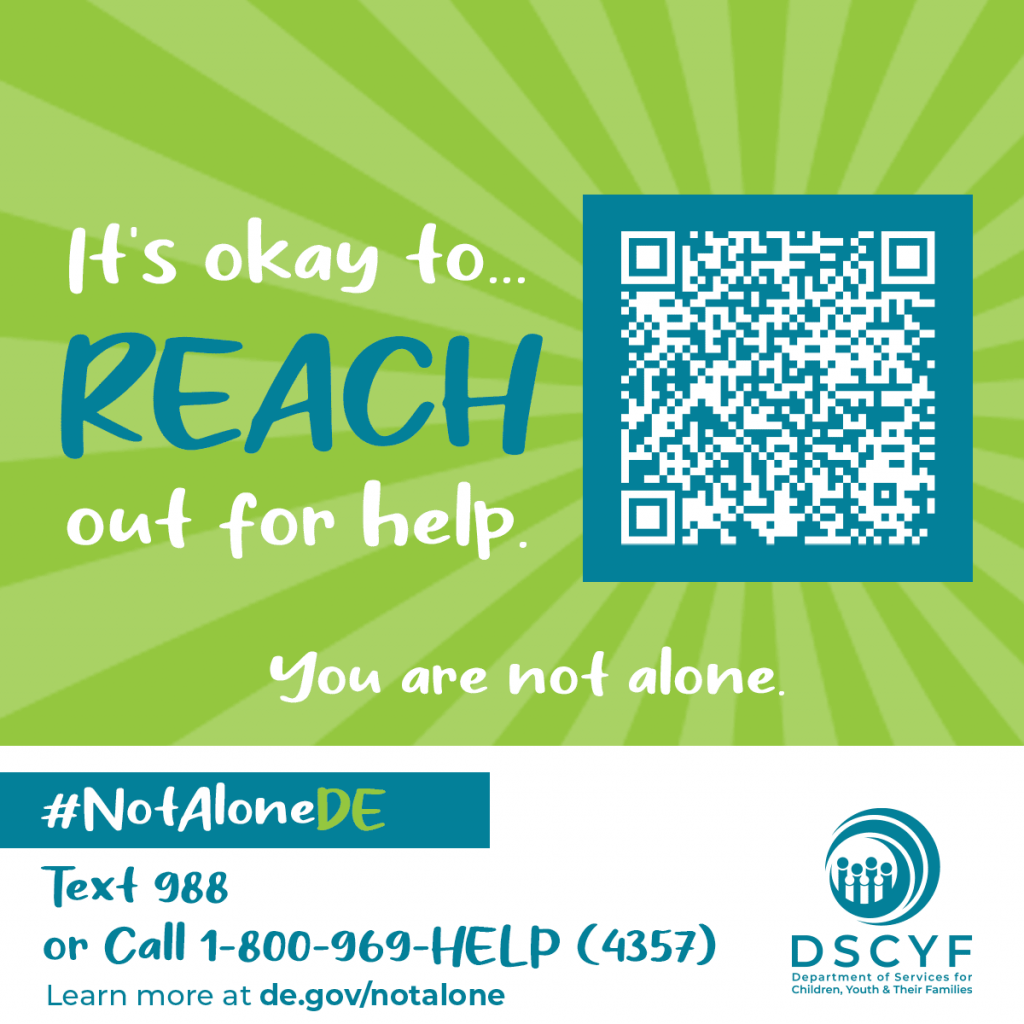
It's okay to...reach out for help. You are not alone social media graphics
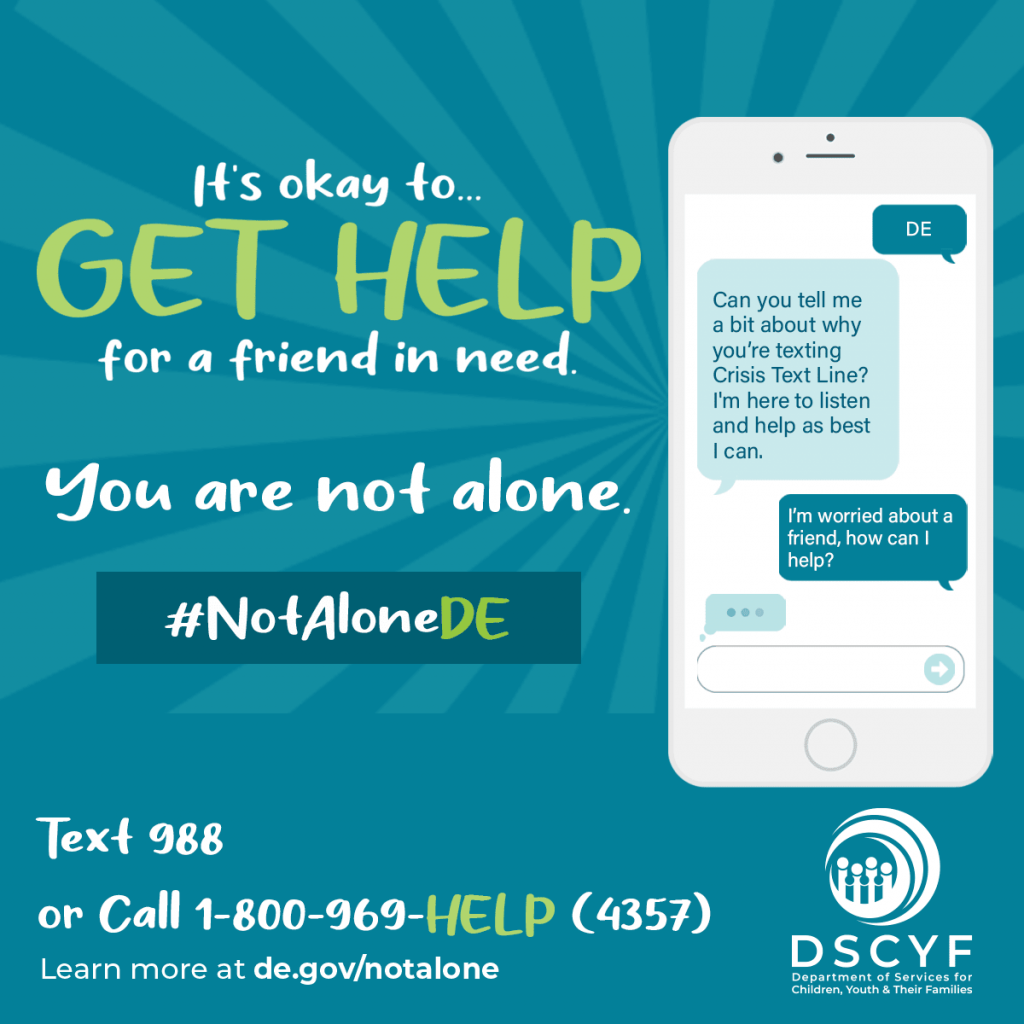
It's okay to...get help for a friend in need. You are not alone.
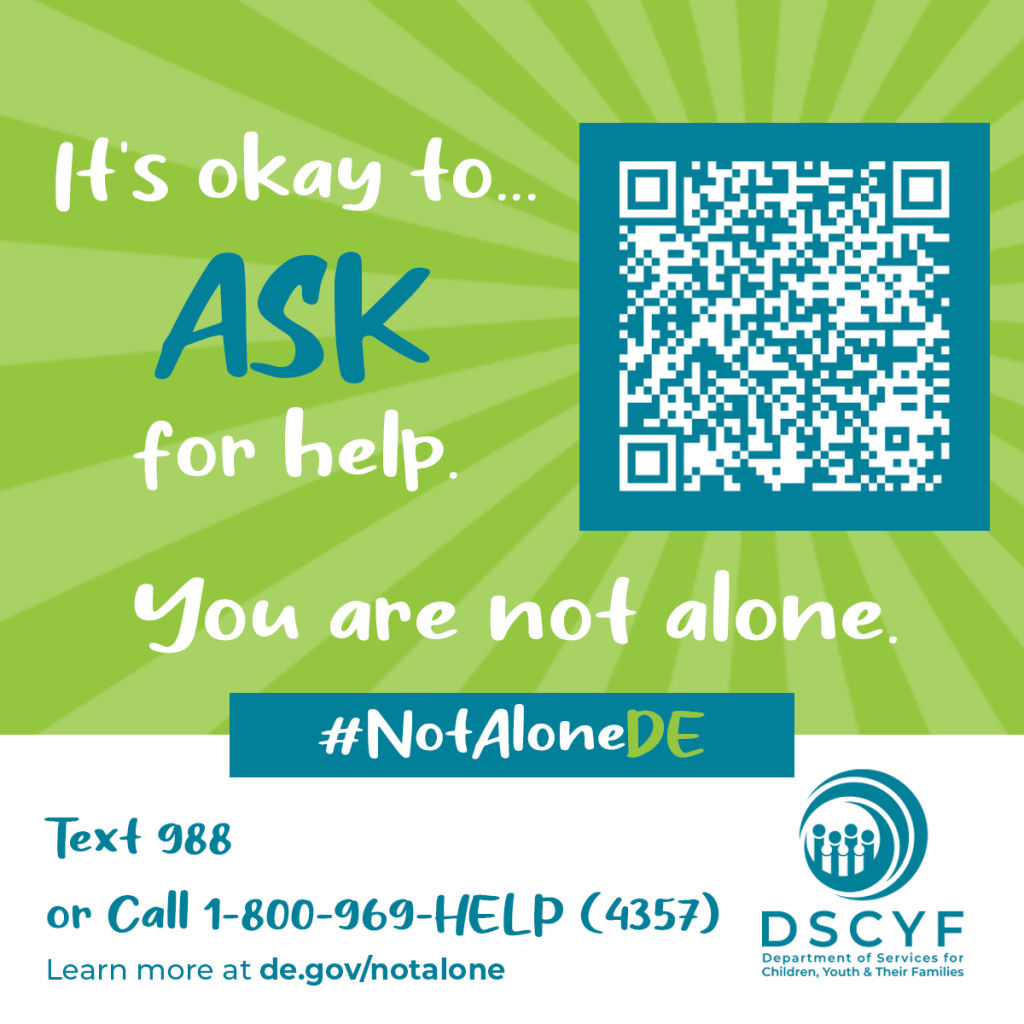
It's okay to...ask for help social media graphics
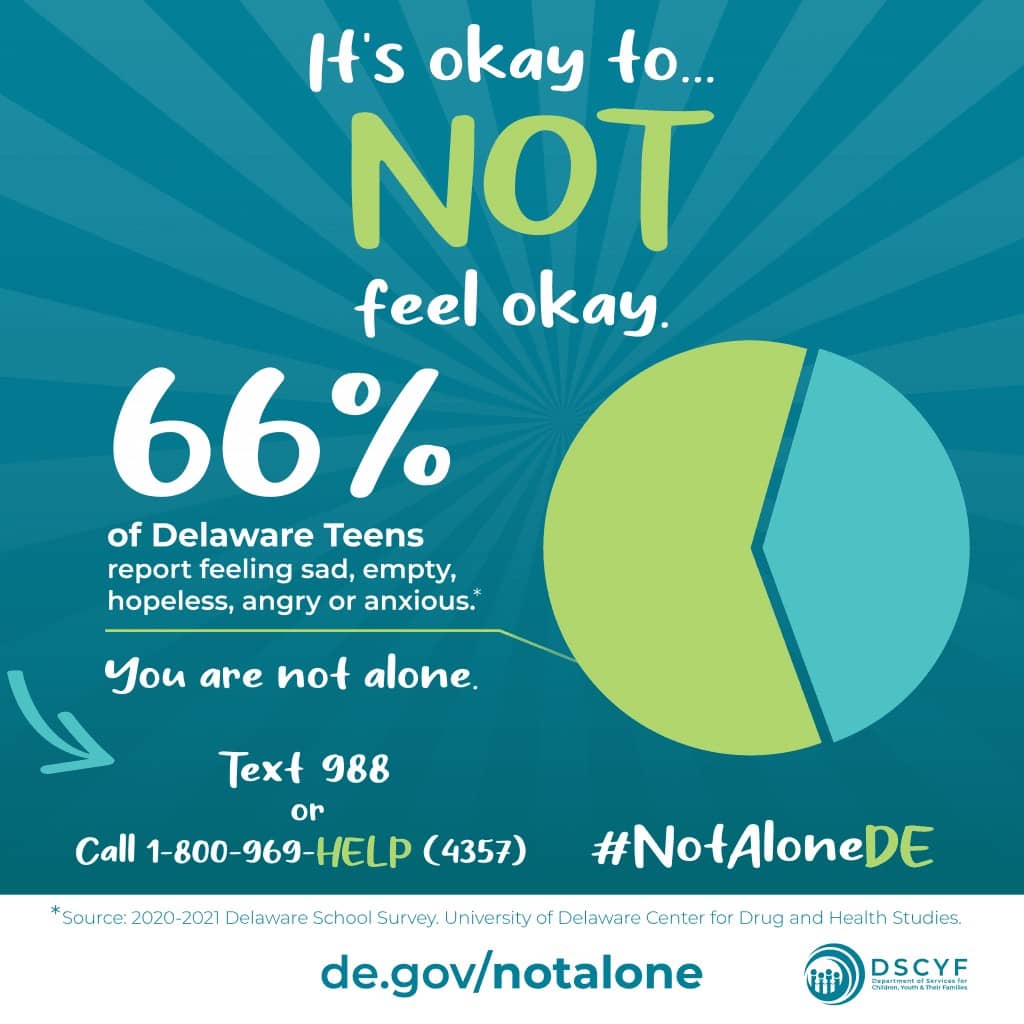
Social media graphic. It's okay to... not feel okay. 66% of Delaware teens report feeling sad.  #NotaloneDE Text 988 or call 1-800-969-HELP
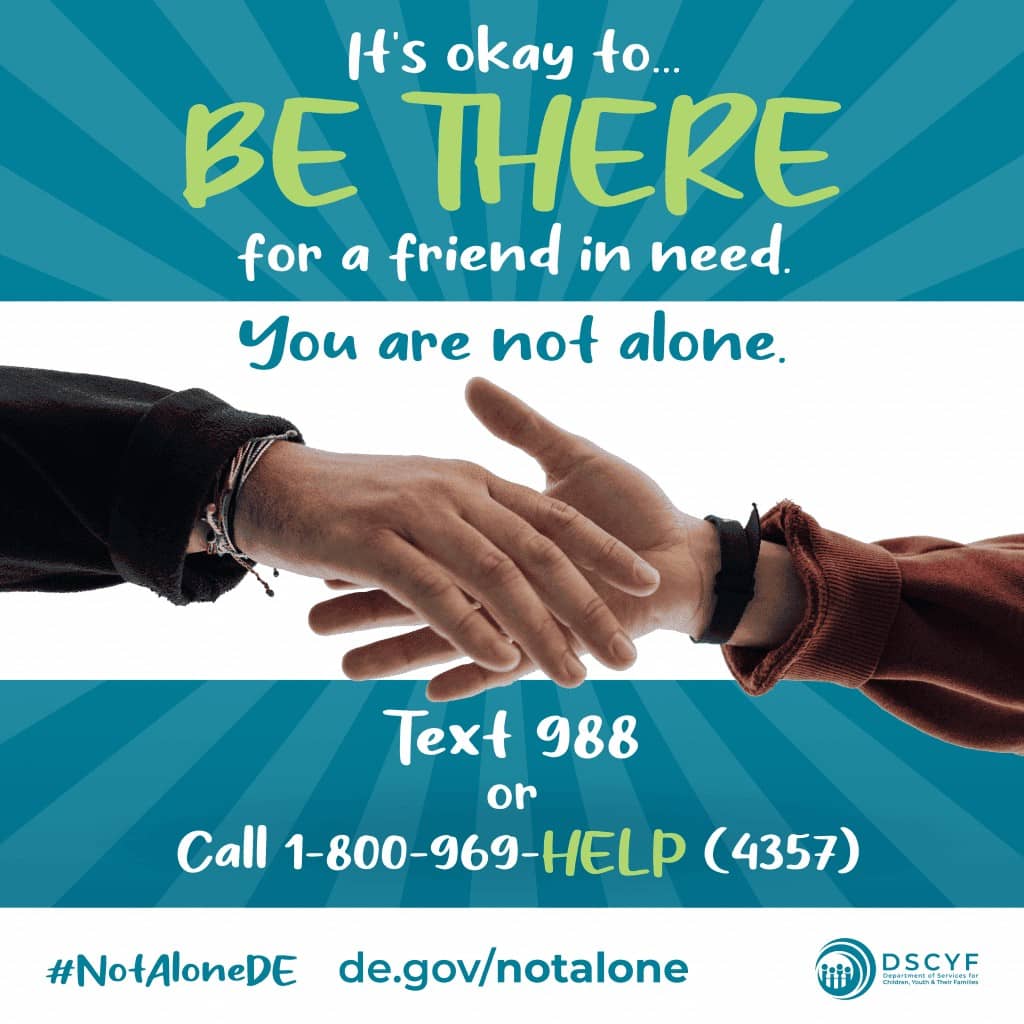
It's okay to...be there for a friend in need. You are not alone. #NotaloneDE. Text 988 or call 1-800-969-HELP
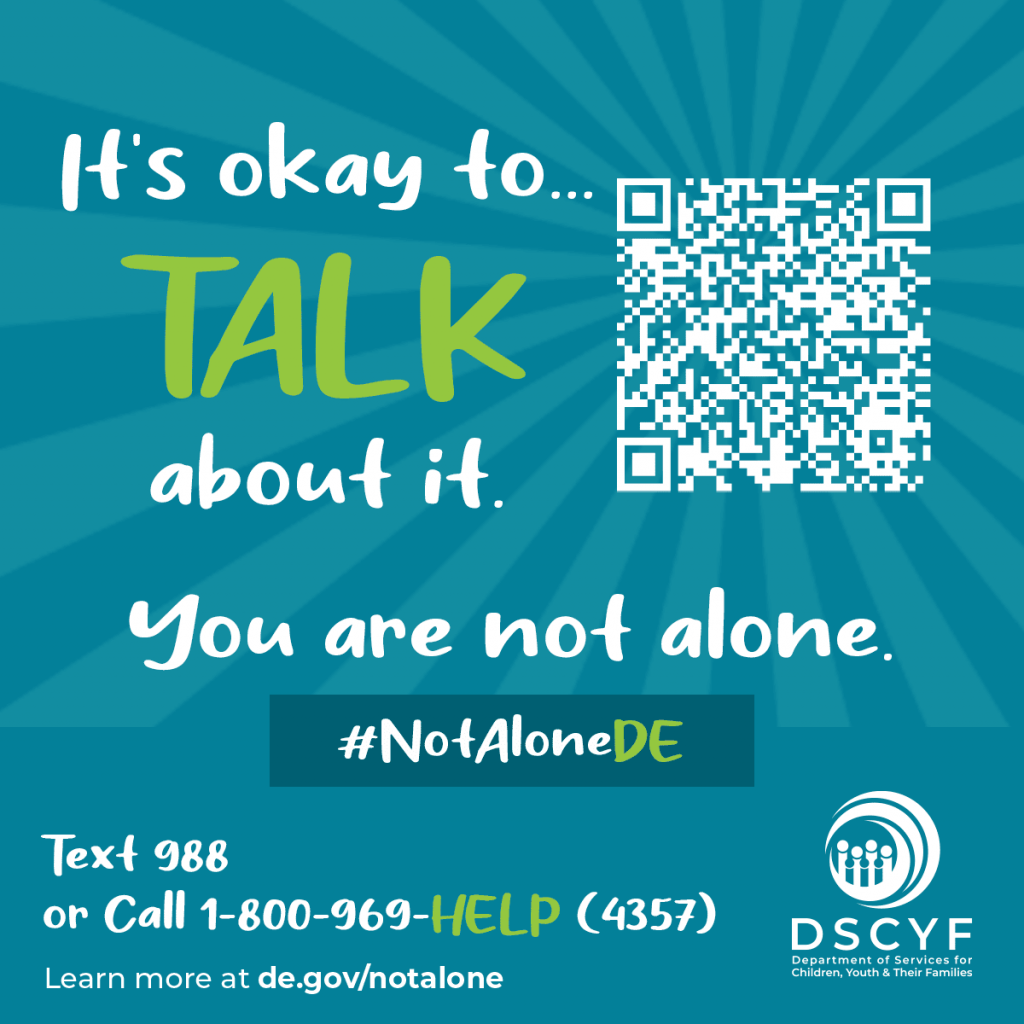
Its okay to talk about it. You are not alone. #NotAlone DE

Suicide Prevention Materials