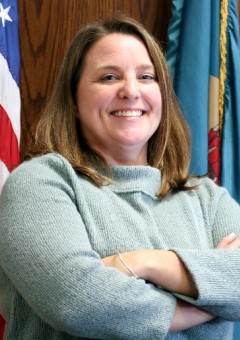

Division of Prevention and Behavioral Health Services (DPBHS)
Steve Yeatman, Deputy Director
Phone: 302-633-2600
e-FAX: 302-622-4475
Grant Opportunity
Who we are?
The Division of Prevention and Behavioral Health Services (DPBHS) is part of the Delaware Department of Services for Children, Youth and Their Families. On July 1, 2010, the Division of Child Mental Health and the Office of Prevention and Early Intervention blended to become the new Division. DPBHS provides a statewide continuum of prevention services, early intervention services, and mental health and substance abuse (behavioral health) treatment programs for children and youth. These services have graduated levels of intensity and restrictiveness that are child-centered and family focused.
DPBHS’ prevention and early intervention services focus on promoting safe and healthy children, nurturing families and strong communities through community and school-based initiatives. DPBHS’ treatment services are accredited under the Business and Services Management Standards of the Commission on Accreditation of Rehabilitation Facilities (CARF) . In addition, the contracted and/or state operated treatment providers within the DPBHS network are licensed where appropriate and most are accredited under one of the nationally recognized accrediting agencies such as CARF , JCAHO , COA or CHAP .
Mission
To provide accessible, effective behavioral health treatment services
for children in collaboration with families and service partners.
Vision
Children and families: reaching their fullest potential.
Who we serve?
The Division provides voluntary behavioral health services to children up to the age of 18 and their families who:
- Could benefit from programming and services that promote health and well-being
- Do not have insurance to cover behavioral health services
- Have Medicaid and who require more than the basic Medicaid 30-hour annual outpatient benefit available through the Diamond State Health Care Plan.
How to obtain services
There are three “gates” to services provided by DPBHS:
- Routine outpatient services
- Crisis services
- Central Intake
Contact information for all of these entry-points can be found on the DPBHS Brochure English version or Spanish version .
Mailing Address: 1825 Faulkland Road, Wilmington, DE 19805
Telephone: 302-892-4515
E-mail: opei.dscyf@state.de.us
For more: Information for Families or Information for Providers
Organizational Structure
To develop, maintain and support a system of high quality, accessible services, and to assure that children and families are served within a coordinated system of care, the Division is organized into the following components:
Administration - Administrators manage budget and strategic planning processes, publish policies, procedures and standards, develop and maintain services, and assure service accountability. Administrative functions also include data, information and business management, quality improvement, monitoring, credentialing, training and public relations.
Prevention Services – These services are directed towards promoting health and wellness, as well as to prevent children, families and their communities from engaging in risky behaviors. We work with children, youth, families, communities, schools and more to prevent:
- child abuse and neglect
- dependency
- juvenile delinquency
- truancy
- mental health disorders
- tobacco, drug and alcohol abuse
- domestic violence
- and other risky behaviors
The Office of Prevention Resource Center (OPRC) holds a collection of psycho-educational materials includes books, research and science-based curriculums, videos and DVDs that are available for loan. In addition, the Resource Center distributes informational brochures and pamphlets to the public that focus on substance abuse, violence, child abuse and neglect prevention as well as other related issues, such as, mental health and juvenile justice issues. Orders can be placed by fax, e-mail, online catalog or phone. Email: Christopher.Miller@state.de.us | Phone: (302) 302-892-6440.
If using the online resource order form , please fill out the information as instructed.
K-5
Early Intervention Program
The K-5 Early Intervention Program is a voluntary program managed in
partnership with the Department of Education and participating local
school districts. The program employs Family Crisis Therapists
statewide to work with children and families identified as “at-risk”. Family
Crisis Therapists assigned to designated elementary schools provide a
range of interventions designed to remove barriers to academic and social
success. The program focuses on providing a “System of Care” by
enhancing collaboration among state agencies and communities to meet
the needs of children and their families. The K-5 Early Intervention
Program expanded from serving nine schools in 1996-97 to its current
fifty-one (51) elementary schools in thirteen school districts and 3
charter schools statewide.
Intake and Assessment - This unit receives referrals for services beyond the routine outpatient level of care. It processes requests for service, and passes the referrals to Clinical Services Management for more intensive follow-up.
I & A Referral Packet
- English
Hints for making a referral - English
Issues to consider in order to save time from having to call us back and/or re-fax us information and to complete the intake process in a timely manner.
I & A Referral Packet
- in Espanol
Hints for making a referral
- in Espanol
Llene por favor esta formulamo completamente
como le es posible y llame si usted necesita ayuda 302.633.2571
Clinical Services Management - DPBHS is part of the Diamond State Health Care Plan. With the exception of the 30-unit annual benefit for routine outpatient services, the Division acts as the managed care organization (MCO) for all children’s behavioral health services provided under Medicaid in Delaware.
Care Assurance/Managed Care – As part of the Medicaid managed care system, DPBHS clinical services management teams, each headed by a licensed behavioral health practitioner, work with families and service providers to refer clients to the appropriate level of care. Teams authorize services, review progress in treatment and assure continuity of care. Care assurance differs from a standard managed care process in that teams take an active role in other aspects of case management. They work with all the agencies involved with youth and their families such as schools, protective services, youth rehabilitation services, treatment providers, etc. to assure that there is a unified service plan.
When a case is first opened under a clinical services management team, a team member meets with the family to provide information about how they will work with them.
- Child and Family Handbook - English [ PDF | Word ]
- Child and Family Handbook - Spanish [ PDF | Word ]
Commitment to Quality
Evidence-based Practice – The Division encourages treatment services that can be empirically supported in mental health and substance abuse literature for specific target populations and presenting problems. Within recent years, the Division has used grants for dissemination and training in a number of evidence based practices. DPBHS is also developing processes for studying client outcome in programs across its entire system.
- Trauma-Focused Cognitive Behavioral Therapy (TF-CBT) - For more information
about the project in Delaware, contact Charles Webb, Ph.D. at
Charles.Webb@state.de.us
-
Family Education
and Support
- Evidence-based programs and practices are
utilized across the spectrum of prevention and treatment services
and are a resource for families and communities to gather needed
skills, information and support.
- DPBHS created intensive outpatient (IOP) services as a safe alternative to psychiatric hospital, residential and day treatment services. From FY 01 through FY 10, DPBHS IOP services have been successful in discharging over 60% of clients to a lower level of care where they can be maintained for 6 months or more. For further information, contact Vanessa Bennifield with email at Vanessa.Bennifield@state.de.us
- DPBHS is currently implementing Parent-Child Interaction Therapy (PCIT) statewide. PCIT works best with children ages 2 -5 who are having emotional or behavioral issues. A trained therapist works with caregivers to use positive discipline strategies, build a more positive relationship with their child and learn skills to change negative parent-child behavior interactions. For further information, contact Nancy Widdoes with email at Nancy.Widdoes@state.de.us.
Data-Based Management - The Division is committed to providing the best outcomes for its clients in the most cost-effective way. Decision-making, whether it is clinical or financial, must be grounded in data. “Every fiscal decision is a clinical decision and every clinical decision is a fiscal decision.”
Complaints and Appeals – Anyone has the right to make an inquiry, lodge a complaint about any aspect of DPBHS operations, and/or to appeal a decision made under the managed care system. The Division encourages individuals to talk together and to settle complaints at the lowest possible level.
-
Appeals
policy and procedure
- Complaints policy and procedure
Quality Improvement – This unit is responsible for monitoring both the internal and external operations of the Division and providing status reports to Division Leadership on a regular basis. In addition to these activities, QI manages the incident reporting process and data base, manages clinical records activities, and reviews and reports on complaints and appeals that rise to the level of central office review.
Training – DPBHS is committed to expanding the knowledge base and clinical skills of individuals who work with clients and their families. If you have any questions about our training initiatives, contact Dana Sawyer, MSW, MPA, LCSW via email at: Dana.Sawyer@state.de.us .